

Our Latest News
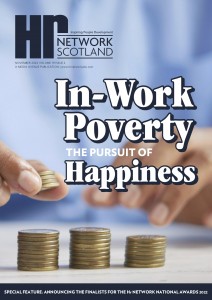
OUT TODAY! – NOVEMBER Issue of Hr NETWORK Magazine
OUT TODAY! – NOVEMBER 2022 Issue of Hr NETWORK Magazine
Hr NETWORK is ‘The Hub’ of Scottish HR and people development with an ‘Access All Areas’ pass to Scotland’s most influential human resource and business professionals across all sectors in Scotland. As well as readers from the world of HR, the magazine is also extremely popular within SME (Small and Medium Enterprise) organisations and is very useful for line managers, heads of department, senior management, managing directors and other professionals throughout the country who play a vital role in the development of people within all industry sectors in Scotland. Published bi-monthly, Hr NETWORK Magazine is informative and a ‘must have’ for its readers, and brings with it in every issue, great opportunities and benefits for advertisers and sponsors too.
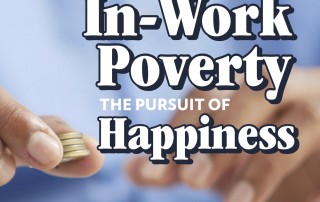
In-Work Poverty: The Pursuit of Happiness
What steps can employers and HR practitioners take to address the current cost of living crisis on employees? Faced with escalating living costs, in-work poverty is hitting the pockets of more workforces than ever across Scotland. Andy Moore finds out how HR can help…
Also in the latest issue:
- The regular sections of the magazine include: Stats, EXTRA and The Bookshop
- The ‘Insights’ section features first class comment from those in the know on a range of subjects including: Work-life Balance; Diversity & Inclusion; Cancer in the Workplace; War For Talent
Click the front cover below to read the latest issue:

Hybrid working has almost tripled, but staff want more flexibility in the office
Hybrid working has almost tripled, but staff want more flexibility in the office
A study has revealed that despite the rise of hybrid working preferences, the office still has a valuable role to play, but flexibility around hours is crucial in the modern world of work. That’s according to The future of flexible working, published by global leader in creating bespoke workplaces, Unispace.
 In its report – which surveyed 3,000 office workers – Unispace found that hybrid working has almost tripled since the pandemic, with 63% of those surveyed now working in a hybrid way. The report also revealed that over three quarters (77%) said that flexible start times would encourage them back to the workplace, indicating that employees seek not only flexibility in where they work, but also when they work.
Flexible working demand is higher among certain demographics, with the report revealing that 86% of those with caring responsibilities desired flexible start times, compared to 71% of those with no caring responsibilities.
When analysed by life stage, the data revealed that 80% of individuals living as part of a couple with dependent children and 76% of single parents wanted flexi-hours. Similarly, those with housemates were most likely to be attracted by flexi-working, with 90% of this group admitting that the freedom to choose their own hours would entice them back to the office. This is compared to 70% of those living alone and 76% of those living with parents.

Ranking employees hinders creativity
Ranking employees hinders creativity
Forced rankings do not improve employee performance, according to new research by Tilburg University and Vienna University of Economics and Business. The study, conducted by Eddy Cardinaels and Christoph Feichter, looked at the effect of rating employee performance and analysed forced and free rating systems on both employee reactions and supervisor rating behaviour.
 Cardinaels and Feichter found that forced ratings are unlikely to improve employee performance over free performance ratings, and instead increases their stress levels – this then negatively affects employee creativity. This is especially the case in jobs where performance is difficult to capture via objective measures such as consulting, auditing, and communications. But even in jobs in which objective criteria do exist (e.g., sales), performance evaluation ratings still heavily rely on the subjective judgment of superiors. In all these situations, forced ratings might lead to problems for employees and superiors.
The study revealed the lack of creativity stems from people ‘choking under pressure’ as a result of the forced ratings.
“It is really important that firms are aware of potential costs and side effects, such as higher stress and supervisors not assigning appropriate ratings. Especially as these can lead other long-time side effects, such as higher turnover rates, health problems, and lack of motivation,” says Professor Christoph Feichter.
On the other hand, forced rankings also negatively impact employees because supervisors’ game the system, and focus on other aspects other than the true performance when evaluating employees.
“In our study, supervisors with forced rankings tend to incorporate aspects in their ratings that have no relation to the real performance of employees, but seem easier to justify towards employees. Moreover, supervisor strategically switch ranks of employees across periods, to assure each employee receives the highest rank at some point in time (although this cannot be explained by their real performance). Supervisors feel uncomfortable with the rankings and want to appear fairer towards the employees. Therefore, they start to game the system,” says Professor Feichter.
The study was published in the Journal of Accounting Research.

British women suffer from 180 ‘OFF DAYS’ a year, according to new research
British women suffer from 180 ‘Off Days’ a year, according to new research
A new report reveals modern women have more off days than good ones, feeling tired or uncomfortable in their skin, on average 15 days a month (a staggering 180 days a year). Six in ten say these days affect their sex life and relationships, while a fifth cancel social plans if they are not feeling their best. Yet, according to the poll by Symprove, women only feel genuinely good about themselves eight days a month (96 a year on average).
 As many as 71 percent cite feeling tired as the main contributor to a lack of body confidence, with clothes not fitting properly (62 percent), and feeling bloated (60 percent) following closely behind. Bad hair days (43 percent), bad skin days (40 percent) and making comparisons to other people on social media (30 percent) also knock confidence on a daily basis, according to the report.
As many as three quarters (74 percent) said their stomach was the physical feature they felt least confident about. Shockingly, just 6 percent of women described themselves as body confident on a day-to-day basis, while half (50 percent) said they were not body confident at all.
The research, conducted by gut health brand Symprove, found that two thirds (62 percent) of women suffer ‘off days’ on a weekly basis, with the percentage rising significantly to 73 percent for women who live with IBS. While over a third (37 percent) of all women surveyed admitted to experiencing days where they feel bloated and their clothes do not fit properly, resulting in an average of four outfit changes before leaving the house.
Beyond physical insecurities, women are experiencing a host of gut-related issues including fatigue (66 percent), regular bloating (65 percent), cramping (40 percent), and constipation (39 percent). Despite this, more than a third (37 percent) are not comfortable talking to a partner, friends, or family about gut health, with 55 percent saying talking about bloating or general gut health in front of their partner would be ‘embarrassing’. Nine in ten British females (89 percent) believe there needs to be more information about taking care of your gut available.
Sammie Gill, Gastroenterology Dietitian at Symprove said: “Our latest research shines a light on the gut challenges women face and how this affects daily body confidence. We know that feeling your best starts with your gut. Bloating is not something women should put up with, there are many strategies available to help alleviate it – including diet and taking a targeted science backed probiotic.”
In partnership with TV personality Lisa Snowdown, Symprove has launched ‘The Gut Couture Collection’; a fashion line designed to highlight the painful realities of IBS and gut issues, through three outfits – the Flatulence Frock, the Loo Roll Dress, and the No Bloat Ball Gown, representing some of the most common symptoms.
Lisa Snowdon said “With so many women suffering gut health issues, it is time we started talking about it more openly. The Gut Couture Collection by Symprove combines full-on fashion attitude with an actual understanding of what people with IBS and gut issues can experience. I loved wearing all the looks; not only were they very comfortable, but the fact that nothing was too tight or restrictive around the stomach made them a joy to wear.”
Cancer Support UK introduces new workplace course to train businesses to support employees affected by cancer
Cancer Support UK introduces new workplace course to train businesses to support employees affected by cancer
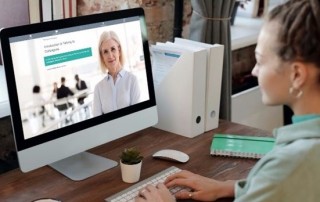
If a work colleague told you they had cancer how would you respond? This scenario is fast becoming a reality, as by 2030 it is estimated that 1.5million people of working age will be living with cancer. The impact that a cancer diagnosis can have on an individual’s mental health is significant, yet 85% of employees with a cancer diagnosis want to carry on working. Knowing how to conduct a difficult conversation about cancer, and support those with cancer in the workplace, is at the heart of a new training programme – the Cancer Support Ambassador course – introduced by cancer wellbeing experts Cancer Support UK.
Developed by Cancer Support UK specifically to give individuals in an organisation the confidence and skills to support colleagues facing cancer, the Cancer Support Ambassador training provides a high-level introduction to cancer and cancer treatments. The half day course covers the physical and emotional side effects of both cancer and cancer treatments.
Most importantly, it contains tools and strategies that equip workplace cancer support ambassadors with the necessary skills and principles to have supportive conversations with individuals experiencing emotional turmoil due to or caused by the effects of cancer.
Marie Gardner, who works as a Cancer Coach volunteer for Cancer Support UK, has been key in developing the Ambassador training. She says: “When you are supporting someone going through cancer, it’s vital that you work with the other person’s agenda. You need to recognise that for many, having a conversation in the workplace about their illness can be challenging. The ability to listen is absolutely key and understanding where the person is in their thought process allows you to work out how best to help them. As a Cancer UK Ambassador, you don’t need to have the answers. The best support you can give is to listen deeply, question sensitively and show empathy.”
Mark Guymer, Cancer Support UK’s CEO, said: “With at least 85% of employees saying how important it is for them to keep working after a cancer diagnosis, there is an urgent requirement for employers to understand the needs of colleagues affected by cancer and to support them appropriately.
“We know through feedback from our Cancer Coach groups that there is a lack of support for people either returning to work following cancer treatment or even for those who have just been diagnosed. Our Cancer Support Ambassador training applies the principles of the extensive knowledge gained through our highly successful Cancer Coach course. The skills covered in the training will enable people who are fulfilling an extra-curricular or voluntary role within an organisation to emotionally support and signpost colleagues, which can only bring significant benefit to the workplace as a whole.”
Key benefits
- Strategies to manage structured supportive conversations
- Confidence to support someone who has cancer
- Understanding the difference between empathy and sympathy
- An understanding of the change process that people go through when receiving a diagnosis and/or treatment
- Learning the skill of high level listening and how to ask the right questions
- Using the right language
- Self-care tips
- Helps address the issues of isolation in the workplace caused by cancer

Managers lack confidence when talking to employees about informal issues
Managers lack confidence when talking to employees about informal issues
 Recent research reveals that HR leaders are less confident in managers’ ability to hold effective conversations around informal issues compared with more formal topics such as objective-setting and development. Overall, HR respondents indicated a ‘medium’ level of confidence in managers’ ability to talk about formal issues, however for more informal matters such as employee wellbeing and flexible working, confidence levels were significantly lower.
The research study, which involved 20 in-depth interviews with senior HR leaders between January and April 2022, was commissioned by OpenBlend – the platform for effective conversations at work – and suggests managers need more guidance on how to broach and discuss the informal issues that have an increasing impact on employee performance in the new world of work.
Most notably, the research revealed a key correlation between high manager confidence and high organisational performance. Findings showed that the more confident a business is in its managers’ ability to have those grassroots conversations, the more likely it is to exhibit high organisational performance.
Commenting on the research study, Anna Rasmussen, Founder & CEO at OpenBlend, said: “Inevitably, managers will feel more comfortable talking about certain topics over others but if we neglect the human side, the data clearly shows that business performance will suffer. If the business can communicate the importance of enabling broad conversations that focus not just on objective-setting, but on wellbeing and the employee’s relationship with work, managers will become instrumental in helping to create the associated performance gains.”