

Our Latest News

Are you being bullied at work? Expert reveals common signs and how to handle it…
Are you being bullied at work? Expert reveals common signs and how to handle it…
Workplace bullying is a real concern, with the CIPD reporting that 25% of employees experienced conflict or abuse in 2024. Bullying can take many forms ranging from insidious harmful comments that are hard to call out to more overt instances of physical or verbal abuse. Irrespective of the form that it takes, proactive steps should be taken to ensure that workplace bullying is not allowed to thrive in your environment.
Dr Richard Anderson, Director of Learning, at High Speed Training, said: “UNISON defines workplace bullying as persistent offensive, intimidating, humiliating behaviour, which attempts to undermine an individual or group of employees. Bullying can take many forms and can occur in a wide range of situations which can make it hard to identify. However, bullying of any kind is unacceptable and must be addressed before it continues to undermine an employee’s right to be treated with dignity and respect.”

The terms bullying and harassment are often used interchangeably however there is a difference between the two. Harassment typically refers to unwanted conduct that seeks to humiliate or undermine an individual group. However, unlike bullying, harassment is caused by prejudice against specific groups and/or protected characteristics. The Equality Act 2010 established nine protected characteristics and if someone is subjected to abuse because of a protected characteristic then that is classed as harassment.
Most discriminatory behaviour is illegal in the UK and so there is specific legal action that can be taken in the case of harassment. Dr Anderson said: “Whilst it can be hard to identify bullying, it’s important that you are aware of the signs so that you know when to take action. Common signs of workplace bullying can include constant criticism, threats, aggression and shouting, removal of duties without reason, overbearing supervision monitoring or being excluded and having reasonable requests refused.
“It could also take the form of being put down or mocked, or more seriously, having malicious rumours spread about you, or unwelcome sexual or inappropriate advances. Bullying can be incredibly damaging to one’s mental and physical health and, if left unchecked it can create a toxic work environment in which employees do not feel safe and supported. It is therefore vital that bullying is tackled immediately and that all signs of bullying are treated seriously.”
There are several ways in which bullying can be tackled in the workplace. These include:
- Creating a positive environment – Whilst this won’t necessarily stop instances of bullying, it will create an environment in which bullying behaviour is not tolerated, and becomes easier to spot and report.
- Encouraging clear communication – This can embolden staff to speak up about what they may be experiencing and also to speak up for one another.
- Documenting what you see – Discreetly recording details of bullying behaviour as they occur provides you with proof which can be presented to HR in order to tackle the situation.
- Reporting the behaviour – Reporting bullying behaviour holds the bully accountable and ensures that the company addresses the issue in the best way.
If you are experiencing any bullying behaviour, it’s important that you speak up. The first action you can take, if you feel comfortable to do so, is to speak directly to the person who is behaving in this way. It may be that they do not realise what they are doing, or how their behaviour is affecting you. Be clear with how you feel and try to stay calm.
If you do not want to do this, or if you have already done so and the behaviour has continued, you could report it to your line manager, HR department or your trade union representative if applicable.
If none of the above are suitable for your circumstances, you could make a formal complaint using your organisation’s grievance procedure. In addition, if you need any further help or advice, you could contact Acas, an independent public body that provides advice on dealing with workplace conflict.

9 in 10 Women would stay longer with employers that support midlife health
9 in 10 Women would stay longer with employers that support midlife health
 A new study from LiveCareer UK®, a trusted online CV builder, reveals that meaningful menopause and midlife health support could be one of the most effective retention strategies for today’s workforce. According to the Midlife Divide Report, 91% of women say they would be more likely to stay with an employer that actively supports midlife health needs. Flexible schedules (58%), mental health days (56%), and more women in leadership roles (54%) were ranked as the most impactful forms of support.
Key Takeaways:
- 91% would be more likely to stay with an employer that actively supports midlife health needs.
- Flexible schedules (58%), mental health days (56%), and more women in leadership roles (54%) were ranked as the most impactful forms of support.
- 68% say gender and age influence how seriously their health concerns are taken at work.
- Nearly one in four (23%) feel menopause is still misunderstood and insufficiently addressed in the workplace.
Menopause Support as a Retention and Inclusion Strategy
Nine in ten women (91%) say they would be more likely to stay with an employer that actively supports midlife health needs. Far from a niche issue, menopause awareness and accommodation are fast becoming key components of inclusive, competitive workplaces.
“Menopause shouldn’t be a career limiter,” said Jasmine Escalera, career expert at LiveCareer UK. “When organisations normalise the conversation and provide meaningful support, they’re not just helping women, they’re protecting their leadership pipeline and building a stronger, more inclusive culture.”
Flexibility Tops the List of What Midlife Women Want Most from Employers
When asked what would make them feel more supported at work, women overwhelmingly pointed to flexibility, paid leave, and representation, underscoring the need for both policy and cultural change in the workplace.
What Would Help Women Feel More Supported:
- 58% — Flexible schedules
- 56% — Paid leave or mental health days
- 54% — More women in leadership roles
- 37% — Manager training on menopause
- 25% — Health insurance that covers menopause-related care
- 8% — Peer groups or safe spaces for discussion
How Women Manage Menopause
In the absence of targeted workplace benefits, many women rely on personal strategies to manage symptoms and maintain productivity:
- 58% seek therapy or mental health support.
- 58% turn to exercise or nutrition changes.
- 52% use hormone replacement therapy (HRT) or other medication.
- 40% rely on supplements or alternative medicine.
- 29% adjust their work hours to cope.
- 6% are not taking specific action; fewer than 2% say symptoms haven’t affected their work.
Gender and Age Bias Shape How Midlife Health Is Perceived at Work
Even as conversations about menopause become more visible, a persistent perception gap remains.
- 68% say both gender and age affect how their health concerns are taken.
- 22% cite gender alone.
- 8% say age is the primary factor.
- Only 2% believe neither gender nor age plays a role.
These perceptions reinforce how workplace culture, not just policy, determines whether women feel seen and supported during a critical career stage.
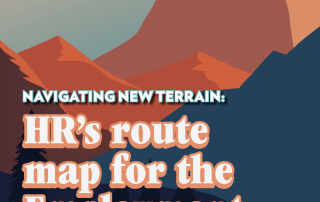
OUT TODAY – March 2026 Issue of Hr NETWORK Magazine
OUT TODAY – March 2026 Issue of Hr NETWORK Magazine
SIGN IN/SIGN UP TO Hr NETWORK HUB TO READ ALL OUR MAGAZINE ISSUES…
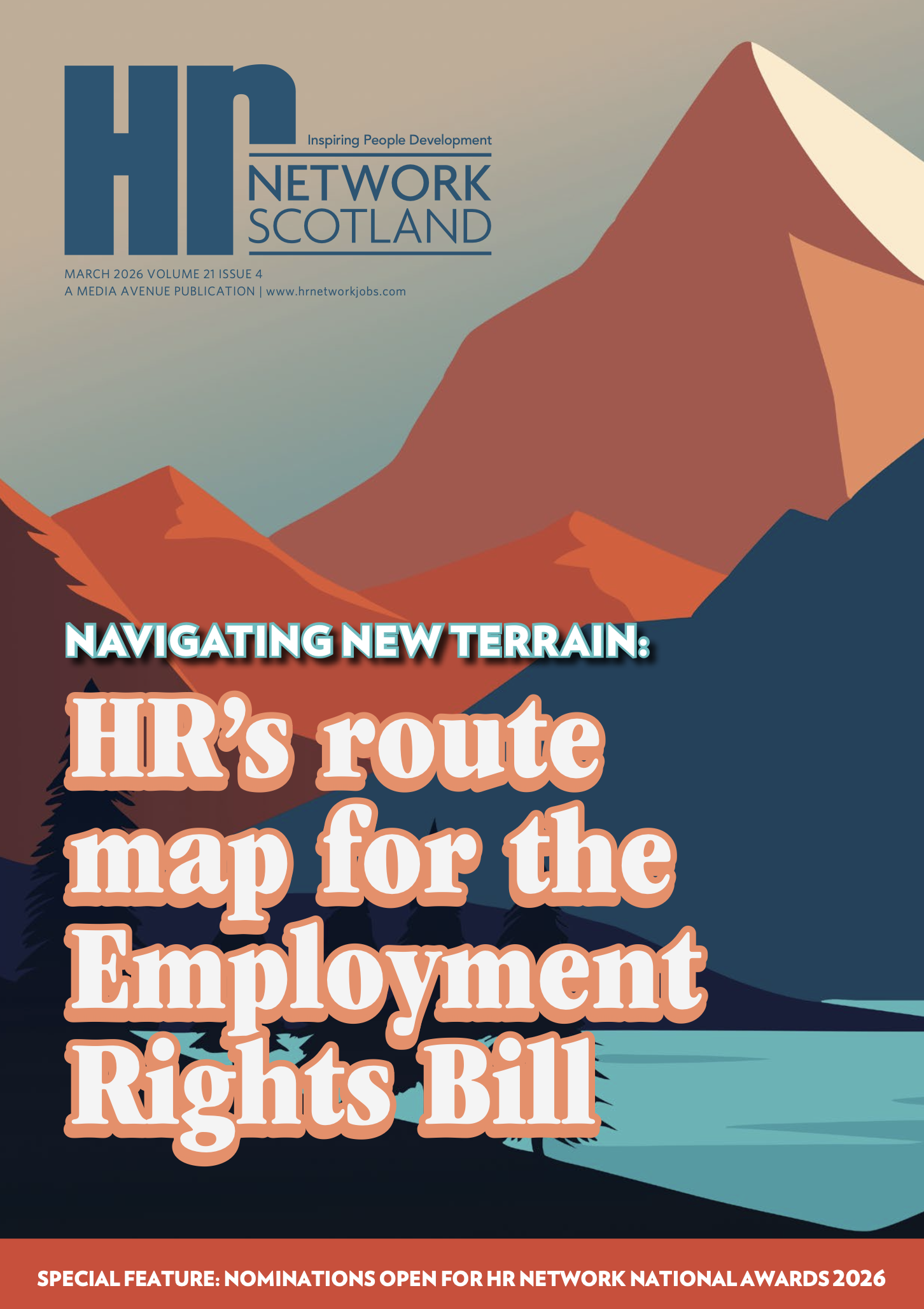
Hr NETWORK Magazine March 2026
Navigating New Terrain: HR’s Route Map for the Employment Rights Bill
The Employment Rights Bill 2025 introduces sweeping reforms to worker protections and intensifies employer obligations. This requires HR to manage heightened risks through phased policy updates, cultural change and driving organisational readiness. Andy Moore took a closer look.
Also in the latest issue:
- Announcing the NOMINATIONS for Hr NETWORK National Awards 2026
- SPECIAL FEATURE: Automation to Acceleration
- The regular sections of the magazine include: News, STATS and EXTRA
- The ‘Insights’ section features first class comment from those in the know on a range of subjects including: Cyber Security; Employee Experience; Trauma in the Workplace
Click the front cover below to read the latest issue:

Hr NETWORK NATIONAL AWARDS 2026 – NOMINATIONS NOW OPEN!!
NOMINATIONS NOW OPEN!!
Nominations for this years Hr NETWORK National Awards 2026 have opened TODAY and this is your chance to: RECOGNISE, ACKNOWLEDGE and REWARD your HR Champions of 2026.
Award Categories for 2026
With 18 awards categories in total, which are FREE TO ENTER, the Awards will determine the top performing HR people, teams, projects and organisations in the Scottish people development and management industry. The ‘Nominations Intention’ scheme captures early interest from those intending to nominate and provides support and ongoing updates on all the categories during the nominations process, OPEN from 1st March to 31st May 2026.
NEW HR TECHNOLOGY AWARD INTRODUCED…
With a huge emphasis on technology in the modern workplace, with the AI revolution and all the opportunities, challenges and threats this presents for HR professionals and teams, Hr NETWORK is delighted to announce the introduction of the brand new HR Technology Award of the Year sponsored by Be-IT resourcing. This new inspiring and innovative category will recognise, acknowledge and reward the very best in technology implementation of a technology-based system which delivers a sustained high level of excellence throughout the systems lifetime and generating significant return on investment for the organisation
Table sales for this year’s awards will be in extremely high demand and organisations wishing to host a table of 10, are strongly advised to secure their table as soon as possible. The winners will be announced at the annual Hr NETWORK Awards Gala Dinner taking place at the hugely impressive Glasgow Hilton on Thursday 12th November 2026.
The Awards categories are judged in two sections, People categories and Project categories:
People
These categories focus on individuals (except for the HR Team category). Judges are looking for exceptional individuals who MUST demonstrate that they are at the top in their respective role.
Projects
These categories focus on projects/specific initiatives that have had a measurable impact in the organisation.
To register your interest in the 2024 nominations process, please email the awards planning team: awards@hrnetworkscotland.co.uk
For information relating to the Gala Dinner which takes place at the Hilton Glasgow on Thursday 12th November 2026, including Table Hosting and Sponsorship, please contact the Awards Planning Team on Tel: 0131 625 3267 or Email: awards@hrnetworkscotland.co.uk
For a full list of categories & criteria, please visit:
– Hr NETWORK AWARDS 2026 CATEGORIES –
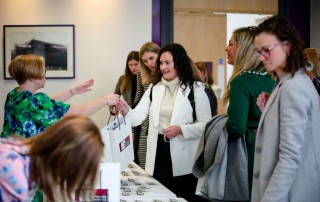
EARLY BIRD DISCOUNT ENDS TODAY!! LAST CHANCE TO SAVE £50 PER DELEGATE
EARLY BIRD DISCOUNT ENDS TODAY!!
Hr NETWORK ‘TRANSFORMATION THROUGH PEOPLE & TECHNOLOGY’ Conference & Exhibition 2026
The Hr NETWORK National Conference & Exhibition will take place on Wednesday 13th May 2026 at the home of Scottish Rugby, the magnificent BT Murrayfield Stadium.
Following a hugely successful Conference & Exhibition in May 2025, followed by the incredible reaction from sponsors & guests at our recent Hr NETWORK National Awards Gala Dinner at the Hilton Glasgow on 13th November 2025, we are delighted to announce details for the forthcoming and hugely anticipated annual Hr NETWORK’ TRANSFORMATION THROUGH PEOPLE & TECHNOLOGY ’ Conference & Exhibition 2026.

This is your LAST CHANCE to SAVE £50 – EARLY BIRD DISCOUNT ENDS TODAY 28th February: £165+VAT
Please note from 1st March, the cost per delegate will increase to £215+VAT – The delegate booking form will be OPEN until Friday 8th May 2026.

UK organisations could unlock £40bn a year in productivity value by closing the AI ‘Grey Zone’
UK organisations could unlock £40bn a year in productivity value by closing the AI ‘Grey Zone’

New research from Zellis reveals that UK organisations could unlock £40 billion a year in productivity gains, and a further £20 billion a year in operating-cost savings through better AI alignment between leaders and employees. The findings are published today in The Grey Zone: The Untapped Advantage of AI Alignment.
The report uncovers the considerable gap between how leaders believe AI is used and how employees experience it day-to-day. Zellis describes this area of misalignment as an AI “grey zone”, where adoption is widespread but impact, confidence and usage is uneven.
The research found that:
- 94% of business leaders surveyed say their organisation uses AI tools, but only 61% of employees say they use AI in their role.
- Employees are far more likely to want AI applied to routine, administrative tasks: 69%saying basic data entry and checking should be AI-led, compared with 44% of leaders.
- Leaders are more likely to want AI used in higher-stakes decisions: 35%of leaders believe promotions and pay decisions should be AI‑led, compared with only 8% of employees.
- 63% of leaders whose organisations use AI say they involve employees or teams in decisions around its use – but only 40% of employees using AI agree they feel involved, and a third (33%) disagree that they’re involved.
Better AI alignment, adoption and integration in the workplace represents an immense, untapped productivity and cost-saving opportunity.
Both leaders and teams recognise this: three-quarters of employees (75%) and leaders (74%) believe productivity would improve if AI were better aligned with how work is actually done. Both groups estimate that around 8% of working time could be redirected to higher-value activities through more effective AI alignment. Applied across large organisations in the UK, this equates up to an estimated 1.7 billion working hours a year, potentially worth around £40 billion in redeployable staff time.
The opportunity goes even further. Leaders estimate that improved alignment could unlock a further £20 billion in potential operating-cost savings. In fact, one in five (20%) leaders say that better use of AI could cut operating costs by 7-10%, freeing up to £1 in every £10 to reinvest elsewhere.
“This research shows just how big the AI opportunity really is. When better alignment on AI could unlock up to £60 billion a year for UK organisations, leaving that value unrealised isn’t an option,” said Abigail Vaughan, CEO of Zellis. “The data makes clear this isn’t just about AI adoption, but about making sure AI is implemented with transparency and collaboration, and in ways that genuinely support how people experience work to reach their potential.”
Across the UK and Ireland AI is increasingly seen as integral to the workplace.
- A third (34%) of employees said they expect their employer to provide access to AI tools that will help them do their job more effectively within the next year, rising to nearly two-thirds (63%) within the next two years.
- Almost half of leaders (47%)say advanced digital and AI skills will be required in their organisation within the next year, rising to more than three-quarters (77%) within the next two years.
- 74% of leaders say employee up-skilling will become increasingly important over the next two years.
Furthermore, the way leaders handle AI also has a direct impact on employee retention, morale and wellbeing.
- Two in five employees (40%) say transparent use of AI would make them more likely to stay with their employer, while a similar proportion (42%)say it would improve trust in leadership.
- 51%of employees and 59% of leaders who use AI agreed AI reduces work-related stress, rising to 62% among employees aged 18-34.
- Three in five (61%)employees aged 18-34, who use AI, agreed it has helped them be more confident in their role.
- Younger employees are more open to AI leadership and engagement, with 58%agreeing that their feedback on AI use is valued and acted upon, compared to much lower confidence across the wider workforce, where only 45% believe senior leaders are using AI effectively, and just 40% feel involved in decisions about how it is used.
These changing expectations around AI are being shaped by its current use. Millennials and Gen Y are currently the most active users with (69%) of those aged 29-44 using AI at work and 27% doing so regularly. As this generation becomes the backbone of the workforce, and future leadership, their patterns of use are setting the standard for what “normal” looks like at work.
“As AI becomes a baseline expectation for performance, progression and job satisfaction, organisations that fail to provide the right AI tools and training risk losing the best talent and falling behind competitors.” said Steve Elcock, Director of Product – AI, Zellis. “AI doesn’t fail because the technology isn’t ready; it fails when people aren’t. Our findings show employees are enthusiastic about AI when it’s used to remove friction from everyday work, but more cautious when it’s positioned as the decision-maker in higher stakes areas like pay and progression. That isn’t resistance to AI, it’s about education and trust. When organisations are clear that AI is there to inform judgement rather than replace it, confidence grows, capability follows and value is unlocked. Alignment turns AI from a source of uncertainty into a catalyst for better decisions, better work and more resilient workplace cultures.”
“The findings show a clear advantage for organisations that focus on AI alignment, not just adoption. By embedding AI across HR, pay, WFM and benefits in ways that support people and build trust, employers can improve the speed and quality of their work and create stronger workplace cultures – an approach Zellis helps organisations to deliver,” said Vaughan. “When leaders involve their people, communicate clearly and use AI to inform rather than replace human judgement, organisations can elevate their work and empower employees to be their best. There’s huge value to be gained through AI when attention is paid to alignment.”
The report includes comparative charts highlighting where leaders and employees diverge most on AI use, alongside visuals showing how the time and cost savings have been calculated from the survey data.