

Our Latest News

BOOKINGS NOW OPEN: Hr NETWORK ‘FUTURE LEADERS’ National Conference & Exhibition 2024

Hr NETWORK ‘FUTURE LEADERS’ Conference & Exhibition 2024
The Hr NETWORK National Conference & Exhibition will take place on Thursday 9th May 2024 at the home of Scottish Rugby, the magnificent BT Murrayfield Stadium.
 Following a hugely successful Conference & Exhibition in May 2023, followed by the incredible reaction from Sponsors & Guests at our recent Hr NETWORK National Awards Gala Dinner at the Hilton Glasgow on 9th November 2023, we are delighted to announce details for the forthcoming and hugely anticipated annual Hr NETWORK ‘FUTURE LEADERS’ Conference & Exhibition 2024.
The delegate booking form for 2024 is NOW OPEN and this is your chance to SAVE £40 on each booking made between now and Thursday 29th February 2024.

HAPPY NEW YEAR: OUT TODAY – January 2024 Issue of Hr NETWORK Magazine
HAPPY NEW YEAR!
OUT TODAY – January 2024 Issue of Hr NETWORK Magazine
Hr NETWORK is ‘The Hub’ of Scottish HR and people development with an ‘Access All Areas’ pass to Scotland’s most influential human resource and business professionals across all sectors in Scotland. As well as readers from the world of HR, the magazine is also extremely popular within SME (Small and Medium Enterprise) organisations and is very useful for line managers, heads of department, senior management, managing directors and other professionals throughout the country who play a vital role in the development of people within all industry sectors in Scotland. Published bi-monthly, Hr NETWORK Magazine is informative and a ‘must have’ for its readers, and brings with it in every issue, great opportunities and benefits for advertisers and sponsors too.
Hr NETWORK Magazine January 2024
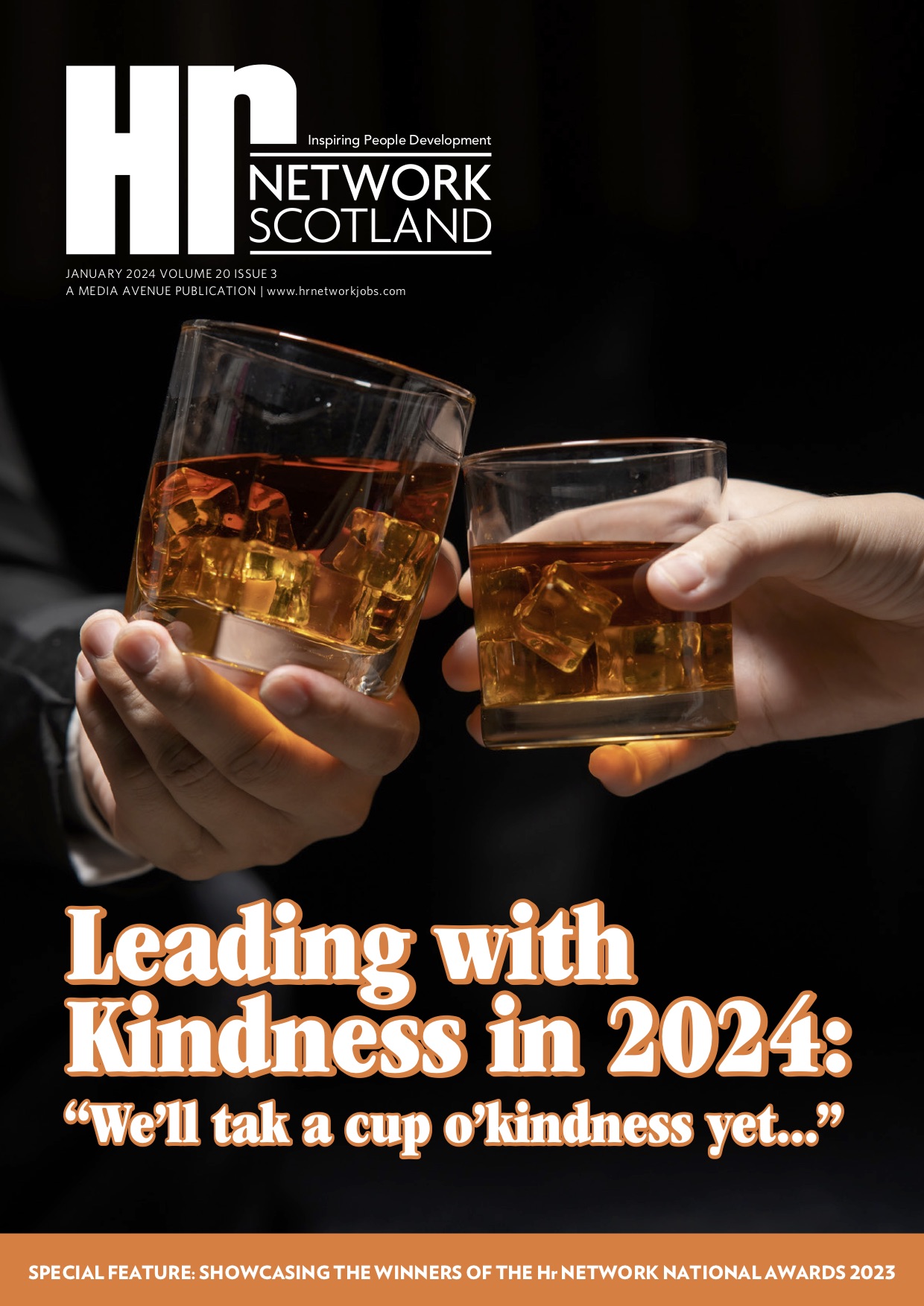
Leading with Kindness in 2024: “We’ll tak a cup o’kindness yet…”
Last years Award’s Gala Dinner saw the introduction of the inaugural Leading with Kindness award, which created a hugely positive impact across the HR industry. Gleneagles Hotel was the eventual winner of this inaugural award in 2023, which was sponsored by kindness consultancy, Leading Kind. People director at Gleneagles, Emma Simpson along with Lynn Killick from Leading Kind, spoke to Andy Moore about the huge benefits for leaders who adopt a leading with kindness culture in their organisation. Also in the latest issue:
- The regular sections of the magazine include: Stats, EXTRA and The Bookshop
- The ‘Insights’ section features first class comment from those in the know on a range of subjects including: Employee Benefits; CEO Mistakes; Menopause at Work; Financial Wellness
Click the front cover below to read the latest issue:

Shopworkers speak out about violence, threats and abuse – Usdaw asks customers to ‘keep your cool’ at Christmas
Shopworkers speak out about violence, threats and abuse – Usdaw asks customers to ‘keep your cool’ at Christmas
Retail trade union Usdaw is asking customers to ‘keep your cool’ as the busy pre- Christmas shopping gets underway, which will culminate in what the retail industry has already dubbed ‘Super Saturday’, with 23 December being the last full shopping day before Christmas.
Shocking statistics from Usdaw’s annual survey of shopworkers shows there are still far too many incidents of violence, threats and abuse against shopworkers. Interim results from over 3,000 retail staff responses show that in the last twelve months:
- 65% have experienced verbal abuse
- 42% were threatened by a customer.
- 5% were assaulted.
- 72% of verbal abuse was caused by customer frustration.
Voices from the frontline: These are some of the comments shopworkers shared when responding to Usdaw’s survey:
- “Aggressive and confrontational customers. Seen shoplifters run out of the door. Customers blame us for lack of stock on shelves.”
- “Called an “ignoramus woman” for (correctly) printing the requested lottery tickets.”
- “Bad language, threatening to stab people. Customer told me to shut up and f**k myself.”
- “Customer was unhappy about being charged for a plastic bag, became very verbally abusive and followed me, threatening physical violence.
- “Drunk people not happy when refused to serve them, threatening and banging on the screen.”
- “I’ve been screamed at and verbally abused by so many customers and so often. I have anxiety and nightmares about going to work.”
 Paddy Lillis – Usdaw General Secretary says: “It is heart-breaking to hear these testimonies from shopworkers who deserve far more respect than they receive. Our latest survey results clearly show the scale of the appalling violence, threats and abuse faced by retail staff.
“It is shocking that two-thirds of our members working in retail stores are suffering abuse from customers, with far too many experiencing threats and violence. Seven in ten of these incidents were triggered by customers being frustrated with stock shortages, lack of staff or problems with self-service checkouts.
“All of these problems are largely outside the control of retail staff, but they are the people who bear the brunt of shoppers’ anger. Our members tell us that incidents of verbal abuse are much worse in the run up to Christmas, when shops are busy, customers are stressed and things can boil over. That is why we are asking customers to ‘keep your cool’ and respect shopworkers, to make the Christmas shopping experience better for everyone.”

The countdown to better access to flex has begun!
The countdown to better access to flex has begun!
The shift towards all parents and carers getting the flex they need took a huge step forward in Parliament this week, meaning it will become law in April 2024. Once this happens, requesting flexible working will be an automatic right from the day and employee starts a job, and they will no longer be expected to explain how the arrangement will work. The other changes employees will notice are that they will be able to make two requests a year instead of one, and the processing time will now be two months instead of three. And by legally ensuring more communication from an employer should they want to reject an application, there will be more opportunity to find a solution that works for everyone.
 This comes after Working Families, the UK’s national charity for working parents and carers put forward the proposals to Yasmin Qureshi MP last year, when they were hopeful that the time was ripe for change. And whilst there’s still work to be done before it can be said that everyone has equal access to flexible working, this legislation marks a sea change, and will pave the way for progressive reform in the future so that one day, flexible working will be the default in the UK.
Commenting on the legislation being passed, Yasmin Qureshi MP said: “I’m grateful to Working Families for helping me initiate and progress the Employment Relations (Flexible Working) Act through Parliament. This new legislation will make it easier for employees to access flexible working opportunities and will encourage employers to think more about what working arrangements they can offer when advertising vacancies. For many of the UK’s working parents and carers, the ability to access greater flexibility could be the difference between quitting work or reducing working hours to meet their caring responsibilities, and staying in their job and maintaining their income.”

Employers urged to do more to harness young women’s talents as discrimination levels rise
Employers urged to do more to harness young women’s talents as discrimination levels rise
The charity Young Women’s Trust are calling for employers to address the rising levels of discrimination that young women face in the workplace as new research reveals half (50%) of young women reported discrimination this year, compared to just over two fifths last year (42%). Over a third (34%) of HR decision makers confirmed that they were also aware of instances of young women being discriminated against in the past year. The same number agreed that sexist behaviour still exists within their organisation.
In the charity’s latest annual survey, which spoke to 4000 young women, 1000 young men and nearly 1000 HR decision makers, almost a quarter (23%) of young women said that they are being paid less than their male peers even for the same work, despite this being illegal. They also said that when instances of discrimination do occur, they feel less able to challenge or report it (25%) compared to young men (17%).
The survey found that almost 3 in 10 (28%) HR decision makers agreed that it is harder for women to progress in their organisation than men. Furthermore, 15% agreed that men are better suited to senior management jobs than women, and 19% said that they would be reluctant to hire a woman who they thought might go on to start a family. Only 13% said the same for a man.
The survey showed some signs of progress towards more equal workplaces, notably that flexible working – which 84% of young women say is important to them – is now embedded in many organisations, with 80% of employers now offering this.
 However, pay policies are still detrimental to women in many workplaces. 46% of employers say that jobs are regularly advertised without the salary details, and 50% say applicants are asked what their current salary is. Leaving salaries open to negotiation disadvantages women and other groups, including black candidates, who can be less confident and discriminated against in negotiations; while basing pay on a candidate’s previous salary increases inequality, because women earn less to start with.
A lack of progression opportunities remains a major driver of income inequality for young women: almost half (49%) are worried about not having enough opportunities to progress – rising to 57% of racially minoritised young women. Meanwhile 28% of HR decision makers agree that it’s harder for women to progress in their organisation than men. However, there has been some improvement in the support organisations offer young women with their progression – 57% offer programmes to support the development of young women, up from 51% last year.
The survey also looked at differences across sectors and found that the sectors which employ the most low-paid young women – retail, hospitality, health and social care, education and arts, entertainment and recreation – are doing less to increase equality. Education is particularly lagging behind:
- 45% of HR decision makers in the sector are aware of young women being discriminated against, compared to 34% overall
- 41% agree that sexist behaviour still exists in their organisation compared to 34% overall
- 25% say it’s difficult to find information about how to report discrimination, compared to 16% overall
- Only 64% of organisations offer flexible working, compared to 80% overall
Meanwhile in the infrastructure and finance and professional services sectors, which has some of the biggest pay gaps between young women and young men, HR decision makers reported higher levels of discrimination and less action to tackle inequality. In the infrastructure sector:
- 29% of decision makers in the infrastructure sector believe men are more suited to management jobs than women, compared to 15% overall
- 47% agree that it is harder for women to progress in their organisation than men, compared to 28% overall
- 61% are likely to ask candidates for their current salary, whereas on average only 50% of organisations do this
And in finance and professional services:
- 27% of HR decision makers said their organisations do not have measures in place to bring about equality, compared to just 19% on average
- 51% don’t include salary details on job adverts, compared to 46% overall
Young Women’s Trust offers information about the changes needed to make workplaces more inclusive for young women and can offer support and guidance to employers. They have also worked with young women to create a manifesto for an equal world of work, and are calling for government and employers to step in and make changes that will level the playing field by:
- Ensuring fair and equal pay with salary transparency; action to tackle pay gaps; and a fairer labour market which values the work that typically women choose to do
- Removing unfair barriers to work with more flexible working; inclusive recruitment processes; improved benefits and employment support; and a childcare system that works
- Supporting young women to progress with clear pathways and internal schemes and training
- Creating better job security with a limit on zero hours contracts and a right to predictable hours
- Ending discrimination for good through better reporting processes, more accountability for employers and improved support for people experiencing discrimination
Claire Reindorp, Chief Executive at Young Women’s Trust said: “Just a couple of months ago we reported on the cost of living having a disproportionate impact on young women’s lives – and these latest figures show why that’s happening, with HR decision makers agreeing that discrimination is still rife in the workplace.
“We know it’s hard for young women to get the jobs that they want because of barriers such as a lack of flexible working and affordable childcare, but then when they do enter the workplace, discrimination and a lack of support to progress creates this broken rung on the career ladder.
“We know that many employers want to drive change, and there is so much they can do to create workplaces where all young women can thrive. We’re urging HR teams to use our resources, read our manifesto and start to implement some of the suggestions that have come from young women themselves”.
FREE workplace wellbeing learning programme for employers and HR professionals
FREE workplace wellbeing learning programme for employers and HR professionals
Employee wellbeing is a huge topic for workplaces as employers navigate working life post-pandemic and straight into a cost of living crisis. While mental health is definitely spoken about more frequently now, we know that there are still barriers to people being open about how they’re feeling at work – namely stigma, and a fear of discrimination.
 According to the ‘Scottish Mental Illness Stigma’ Study, published by See Me and the Mental Health Foundation in 2022, 71 per cent of people with severe, enduring and complex mental illnesses reported facing stigma and discrimination in their place of work in the last 12 months. Of those who identified it as an area having the biggest impact on them, 71 per cent reported being treated unfairly by employers, supervisors or managers, while half (52 per cent) admitted to feeling pressured to not speak about their mental health needs at work.
It’s estimated that, in Scotland alone, mental illness costs employers £2bn a year in sickness and recruitment costs. That’s a huge sum of money that could be avoided. We’re calling on employers to do more to support employees and create a culture where it’s okay to talk about your mental health, and where they know they’ll get support when you need it.
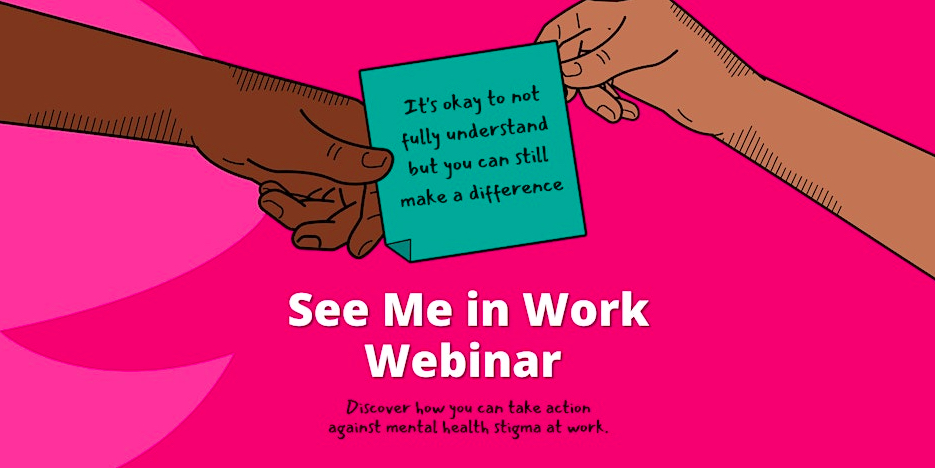
Education is key for employers and managers. It’s okay to not fully understand someone’s situation or experience, but it is never okay to stigmatise and discriminate as a result.
In the months ahead, See Me’s workplace team will be hosting a series of free-to-attend webinars and masterclasses for Scottish employers to shed some light on the importance of taking action to address mental health stigma and discrimination at work – and how to do it.
The sessions will showcase how taking action to tackle mental health stigma at work can benefit your business – by saving money, reducing absenteeism and presenteeism, and creating a better working environment for your staff. The sessions will cover a range of topics, including supporting conversations on work-related stress and how to get management buy-in when it comes to prioritising employee wellbeing.
For more information and to book your place at one of the FREE seminars: