

Our Latest News

Is the UK’s skills crisis reaching a tipping point?
Is the UK’s skills crisis reaching a tipping point?
The number of applications per vacancy have steadily decreased as the skills crisis continues to grip the UK, with figures dropping 40% between January and February 2022. That’s according to the latest data from the world’s largest network of job boards, Broadbean Technology.

According to the statistics, the number of professionals applying for new jobs fell 37% between February 2021 and February 2022 as vacancies spiked 52%. While this data highlights a concerning picture for the UK’s skills availability, pre-pandemic comparisons provide a clearer indication of the talent crisis facing the recruitment sector.
Broadbean’s analysis revealed a 55% decline in the number of people applying for new jobs between February 2019 and February 2022, indicating the extent of the impact of Covid and Brexit on the UK’s labour market.
Across the sectors, the data reveals a significant decline in the number of people applying for roles across the engineering, IT, retail and healthcare sectors. In the retail arena, applications per vacancy fell 45% between January and February of this year, while figures in engineering and IT were down 41% and 38% respectively. Medical and nursing job applications also reported a 30% decline which is indicative of the continued pressure being felt across the healthcare sector as it attempts to play catch up on routine services following two years of significant demand.
Alex Fourlis, Managing Director at Broadbean Technology commented: “The UK’s skills crisis has been well documented over the last year, impacting almost every business, of every size, across every sector. The uptick in recruitment activity at the beginning of 2021 was initially welcomed with open arms in a Covid-hit economy, but we all soon felt the squeeze on resources as we found ourselves in a unique scenario where everyone was recruiting at the same time. And while Brexit may feel like a lifetime ago, the impact this has had on the labour market wasn’t immediately felt, largely due to the pandemic. There is no quick solution to rebuilding dwindling talent pools and we fully expect this squeeze on resources to continue over the coming months. We do, however, expect to see more employers and recruiters using innovative technology and maximising partnerships with external talent suppliers to tackle this skills crisis.”

GLOBAL EVENT: 2nd annual Innovation@Work Global Week 2022 – Reimagining leadership, collaboration and productivity
The Future of Work is Here, Transforming the Now!
2nd annual Innovation@Work Global Week 2022 – Reimagining leadership, collaboration and productivity
How do we beat the “Great Resignation” and retain talent? How do we leverage the benefits of technology while being empathetic toward the wellbeing of employees? Should we all be asynchronous by default? What ground rules are needed and what are the symptoms of imbalance between different ways of working? How do we ensure those who are working remotely are not overlooked in a hybrid model? HR leaders need to foster connection between distributed employees and be more intentional about building a predictable rhythm for when people will convene. So how do we ensure our sterile post-pandemic offices are able to breed collaboration and co-creation?
Join virtually or in-person this March 28th-31st for the 2nd annual Innovation@Work Global Week. Over four days 120+ speakers (50+ c-level) will debate the most pertinent issues for today’s c-suite, giving you fresh inspiration and takeaways to apply to your own 9-5. Don’t miss the new Back to the Future of Work in-person day in London on Tuesday, March 29th or the Wellbeing@Work Day taking place on Wednesday, March 30th
Event format:
- Monday, March 28th – virtual day
- Tuesday, March 29th – in-person day, London, UK
- Wednesday, March 30th – virtual day
- Thursday, March 31st – virtual day
Click below to register:


Exciting HR opportunities at CrossReach
Exciting HR opportunities at CrossReach
CrossReach is a charitable organisation that puts people at the heart of everything they do. From caring for older people, children and families and the homeless to supporting those with learning disabilities, they’ve been delivering innovative social care for 150 years. And as one of Scotland’s largest social care providers, they have 65 services and 1,800 employees across the country.
As a member of their Corporate Services team, you’ll be helping some of the most vulnerable people in society live safer, fuller and happier lives. Their values driven culture means they are accepting, respectful and compassionate to both their service users and employees. So, this is your chance to join them and you’ll be part of a professional environment with a range of development opportunities and a generous benefits package. It’s a career that will enhance both your life and the lives of vulnerable people across Scotland.
Learning & Development Manager – £39,149 – Full time, Edinburgh
At CrossReach, they want their service users to receive outstanding care every day. That means giving their staff the skills, knowledge and confidence to do their jobs to the best of their ability. As Learning & Development Manager, you’ll be key to making this happen. Contributing to the development and leading the implementation of their People Development Strategy, you’ll help to identify training gaps within the organisation and innovative training solutions. You’ll also be responsible for developing and personally delivering high quality management training to our varied manager community and become the main point of contact between business areas and internal training providers. CrossReach are looking for an appropriate qualification and/or significant learning and development experience, combined with proven experience of designing training solutions and leading a small team. If you would like to arrange an informal discussion about any of the roles available, or have any questions, please contact Angelo Deponio – email: angelo.deponio@crossreach.org.uk
HR Administrators – £18,505 – £18,844 – Full time, 38.5 hours per week, Edinburgh or Part time, 20 hours per week, Edinburgh
This is an exciting time for HR Operations at CrossReach, with new investments in their system and processes, you will be joining at the perfect time to help them create new ways of working to improve the experience for all their people. As part of this busy team, you will be responsible for ensuring that they deliver an efficient and responsive operational HR service to the organisation. You will support the full employee life cycle, from updating and maintaining their HR records to supporting managers and responding to enquiries from staff. This role offers a great opportunity to take on a HR role in a supportive environment, working closely with colleagues and managers to deliver an efficient and effective service to their people. You will ideally have some administration experience, but being organised, flexible, customer-focused and methodical are just as important. CrossReach are currently operating a hybrid working arrangement with staff working between home and the office. If you would like to arrange an informal discussion about any of the roles available, or have any questions, please contact Angelo Deponio – email: angelo.deponio@crossreach.org.uk
Recruitment Officer – £24,498 – £28,779 – Full time, Edinburgh
At CrossReach they are proud to deliver social care to a huge range of people right across Scotland. However, they can only do this if they have the right people with the right skills and with more and more people relying on them for support, recruiting the right people has never been so important. As Recruitment Officer, you will be responsible for supporting our managers through the recruitment process, working with them to develop new and creative recruitment campaigns that reach the best people. Day to day, you will be helping managers draft and post their vacancies across a range of platforms, maximising social media to ensure that our adverts get the best possible coverage. You will also support managers with their selection process, screening, and interviewing candidates to ensure the best fit. As our recruitment expert, you will be responsible for generating new pipelines and building relationships with higher education providers and schemes such as the Princes Trust. You will also have a key role to play in supporting and guiding potential and current candidates through the recruitment process, ensuring that we deliver real customer service and that they are fully informed throughout the process. As we are in the process of investing in new recruitment software, this role offers a fantastic opportunity to make a real difference to the way that we manage our whole recruitment experience. You will of course have experience in a similar recruitment role, but primarily we are looking for someone who can think creatively, provide great customer service and who is passionate about matching the right people to the right job. If you would like to arrange an informal discussion about any of the roles available, or have any questions, please contact: Angelo Deponio – email: angelo.deponio@crossreach.org.uk

At CrossReach, they strive to ensure that they are accepting, respectful and compassionate to both their customers and their employees. So, join them and you’ll be part of a professional environment with a range of development opportunities and a generous benefits package. It’s a career that will enhance your life and the lives of vulnerable people across Scotland.
If you would like to talk to someone about the types of opportunities CrossReach have, or have any other questions, please contact: recruitment.team@crossreach.org.uk
To find out more information and apply, please visit:
www.crossreach.org.uk/careers
Closing date for all these roles is: Sunday 3rd April 2022.

LATEST NEWS: One in three office workers wait over a month to have expenses reimbursed
One in three office workers wait over a month to have expenses reimbursed
Over a third (38%) of office workers have to wait more than a month to receive their expenses back, new poll data has revealed. The Inconvenient Expenses poll, conducted by Just Eat for Business on LinkedIn, reveals workers attitudes towards handling admin for expenditures like lunch, as well as finding out the average time it takes to submit and process these expenses.
The study was conducted to encourage businesses to take advantage of employee benefit services like Just Eat Pay – a prepaid voucher available with daily or monthly allowances, which works to reduce the hassle of processing complex and costly food expenses.
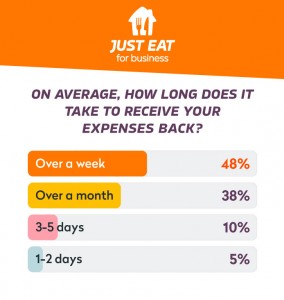 The time it takes to reimburse expenses is a contributing factor to how workers feel about handling admin, as over a quarter (28%) of workers revealed they wish submitting expenses wasn’t their responsibility, while 1 in 3 admitted they find dealing with expenses annoying.
Mike Chappell, Co-Founder and COO at Formspal, speaks on the often lengthy process of expense processing, and how this admin time could be better used by businesses: “Concerning expenditure reporting, employees and finance teams alike must deal with a lot of tedious and time-consuming manual labour. It’s impossible to send a request to finance unless it has been reviewed and approved by management, and the finance team must first process the claims and balance the transactions before issuing refunds. In addition, it doesn’t take into account any exchanges before the final step between the parties. This means there’ll be a delay in reimbursing employees, exacerbating the already existing financial stress for both parties. As a result, employees’ time engaged in the expense process may be better spent on the company’s strategic, high-value projects.”
Caleb Riutta, Co-Founder at Offer Sesame, weighs in on the study, commenting on the often-confusing expense policies, which can sometimes leave employees ineligible for their expenses after submission: “Many business purchasing policies are overly complex, confusing, or even contradictory in an attempt to cover every possible circumstance. On the other hand, some businesses lack explicit policies and instead rely on employees to utilise their best decision, which may not coincide with the financial department’s. For example, employees may unknowingly spend outside of policy and be unable to get reimbursed in both circumstances, putting them at an economic disadvantage simply for trying to execute their jobs. Finance should support systems that ensure personnel comply with the policy in the first place, rather than reprimanding them after they’ve done something wrong.”
Lucy Cantan, Sales and Partnership Director at Just Eat for Business, weighs in on the polls: “Completing and processing admin for expenditures such as lunch or work dinners can be time consuming for all involved – whether you’re an employer or employee. However, it’s really important that everyone receives what they’re owed and continues to benefit from paid-for meals and travel costs. “That’s why we encourage businesses to take advantage of schemes like Just Eat Pay, which reduces the hassle of completing and processing expense forms, and means employees and employers alike can focus their efforts elsewhere.”
INFORM: From Love Your Employees – NEXT EVENT: Tax efficient planning for high earners
INFORM: From Love Your Employees
NEXT EVENT: Tax efficient planning for high earners
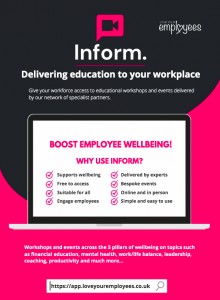
Love Your Employees has built INFORM to help businesses deliver on their L&D initiatives and deliver education into the workplace. The value of learning and development in organisations is well proven. The Love Your Employees partners deliver high quality, engaging training, and education direct to you and your employees. Based around the 5 pillars of wellbeing, their events and workshops can help you:
- Increase financial skills of employees to reduce financial stress, help them plan, live and enjoy life
- Increase productivity by giving employees knowledge, skills and advice on key issues that affect them
- Help employees learn new skills, self-development is a key contributing factor to self-esteem and self-worth and helps boost morale
- Take an active part in the development and success of your people to help increase employee retention
- Help retain and attract top talent, businesses who take learning and development seriously see the results on the bottom line
- Increase engagement with your benefits packages. Inform events help employees see the value in what you offer and help increase uptake.
How It Works
- Sign up and register your organisation to the Love Your Employees community
- Browse Inform events schedule to find an event that your employees will find useful – you can register for as many as you like!
- Once you register for an event you can share your unique employee link with your employees
- LYE take care of the rest, their partners deliver first class education to your employees
- They keep you updated regularly with new events and the updated events schedule so you and your employees never miss out!
According to a 2016 Gallup report, 87% of millennials say learning and development in the workplace is important while 59% of millennials say having opportunities to learn and grow is extremely important when deciding whether to apply for a job.
Next Event
Tax Efficient Planning for High Earners – 24th March 2022
What you can do to make the most of your taxable allowances: optimising taxable allowances available to you as tax year end approaches on 5th April; tax efficient saving and investing; and reducing your tax burden now and in later life.
Register now: https://bit.ly/3hMIEVw
Other Upcoming Events
- Get Your Finances in Shape for Home-buying – 20th April 2022
- Retirement planning – 21st April 2022
- 15 minutes of mindfulness to make your day more productive – 10th May 2022

NEW HOME: BT Murrayfield Stadium to host Hr NETWORK CONFERENCE & EXHIBITION 2022
BT Murrayfield Stadium to host Hr NETWORK CONFERENCE & EXHIBITION 2022
Following the incredible response so far from delegates and exhibitors for this years’ forthcoming and hugely anticipated annual Hr NETWORK Conference & Exhibition 2022, the ‘Our New World of Work’ themed event taking place on Thursday 12th May, will now take place at the magnificent home of Scottish Rugby, the hugely impressive BT Murrayfield Stadium.
Located just 10 minutes walk from Haymarket Train Station, with unlimited parking and an Edinburgh Tram stop situated at the entrance gate, the switch to the new venue is a vital move for the organisers and promises to be Scotland’s largest and most talked about HR Conference & Exhibition in 2022.
 Commenting on the switch of venue, founder of Hr NETWORK, Lee Turner said: “This is an extremely exciting opportunity for everyone involved, including all our delegates, sponsors and exhibitors and one we simply had to make, to meet the demands from the incredible interest we’ve received for this years’ gathering, since mid-February.
Lee continued: “With around nine weeks to go until the Conference and the epic challenge to switch the venue at this time, there will always be the added stress of such a move and all the usual things to think about, but the venue is ideal for us and we simply had to make the move to the bigger venue and we’re looking forward to attracting many new delegates who haven’t been able to attend the Conference previously, due to limited space available at the previous venue.
Lee concluded: We are delighted to host this years’ event at one of Scotland’s top conference & exhibition venue’s and also very excited to be working with the Hospitality Team at BT Murrayfield, who are renowned for hosting hugely successful large scale events and together we will deliver the best experience we can for our delegates, sponsors and exhibitors.
With delegates attending from across the people management & development landscape in Scotland and the wider UK, there are SIX keynote speaker sessions throughout the day, designed for delegates to gain invaluable insight and inspiration from a range of people directors and experts on a range of topics.
As well as the Conference & Exhibition taking place on Thursday 12th May at BT Murrayfield, Lee and his team will also host the annual ‘Leaders Dinner: The Reunion’ in the stadium’s President’s Suite where many of Scotland’s senior HR & business leaders will gather for Dinner and the opportunity to catch up with industry colleagues, for the first time, in a long time.

For further details on attending as a delegate, sponsoring or exhibiting at the Conference & Exhibition, or hosting a Table of 10 at the Leaders Dinner on the evening before the Conference, please contact the Conference Planning Team on Tel: 0131 625 3267 or email: subscriptions@hrnetworkscotland.co.uk
Please visit the Conference & Exhibition page for details on getting to BT Murrayfield: https://hrnetworkjobs.com/events/conference/